

AI In Manufacturing is always growing day by day in terms of high quality, customization, optimization processes, smart technology, robotics, data analytics, and so on. AI is a manufacturing role that uses machine learning, neural networks, and decision-making. Natural language processing (NLP) and virtual agents make accessing data and executing tasks easier for users. Users can interact with AI-powered virtual go-betweens via voice or text to gain real-time visions and notifications. Using machine learning for predictive maintenance can reduce unplanned machinery downtime and upkeep costs by 30%.
AI provides 360-degree visibility across plants, lines, and granaries. This gives users insights to detect quality issues, reduce scrap, and make other manufacturing improvements. This helps manufacturers increase production throughput by 20% and quality by 35%.
What Is AI In Manufacturing?
AI in manufacturing seamlessly integrates with both information technology (IT) and operational technology (OT) environments. While applying AI to manufacturing data can help industries with predictions and forecasting, AI could automate and streamline operations.
By harnessing the control of machine learning algorithms and deep learning neural networks, AI enables manufacturers to analyze vast quantities of data made by industrial IoT and smart factories, facilitating improved decision-making, increased efficiency, and enhanced product quality. However, you might ask – there are so many other technologies that could help the manufacturing industry. Why AI?
Meanwhile, AI engineers to AI.
Why Is AI Important In The Manufacturing Industry?
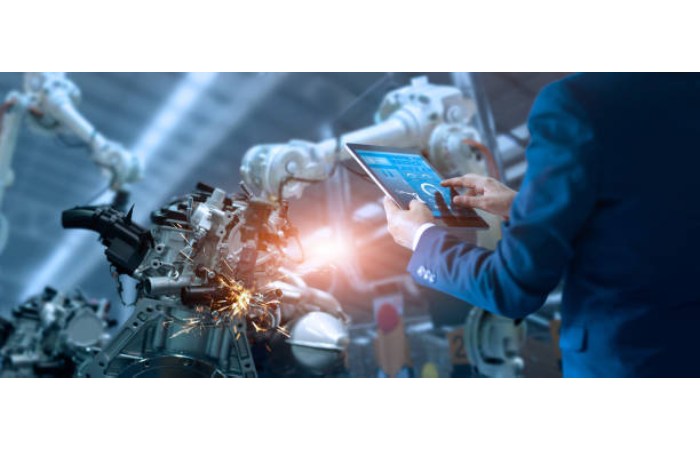
AI implementation in manufacturing facilities is gaining significant traction among manufacturers. According to research by Capgemini, more than half (51%) of European manufacturers are adopting AI solutions.
This trend is driven by manufacturing data being well-suited for AI and machine learning models. Manufacturing processes generate much analytical data, which AI can effectively analyze. Hundreds of variables impact production, and while these complex relationships are difficult for humans to comprehend, machine learning models can accurately predict the impact of individual variables.
AI still lags behind human capabilities in other industries involving language or emotions. However, in manufacturing, where the data is numerical and structured, AI scores big, making it an attractive solution for optimizing processes and improving overall efficiency.
Sounds interesting, right? Now, let’s address the big question: How is AI changing the manufacturing industry?
How Is AI Revolutionizing The Manufacturing Industry?
Also Read: Smart TV Converter
Supply Chain Management
Handling the complexities of supply chain management is crucial for manufacturers, and AI has emerged as a game-changing solution. Machine learning models can accurately forecast demand by analyzing historical data, allowing companies to optimize inventory levels and reduce costs. For example, an automotive manufacturer could use ML to predict spare parts demand and streamline stocking.
Leading companies like Walmart are leveraging AI for supply chain optimization. Walmart uses machine learning algorithms to forecast demand, evaluate sales data, and manage inventory. This AI-driven forecasting ensures product availability while minimizing excess stock. You see, by integrating AI, manufacturing supply chains can make better decisions now. No more out-of-stock!
Cobots
- Have you heard about collaborative robots or “cobots” that work with you? These AI-driven robots can boost productivity by teaming up with human operators on the floor. They are often used in fulfillment centers to pick and pack orders. These robots utilize AI systems to navigate complex spaces and accurately identify objects.
- Amazon’s AI robots use machine learning to accelerate order fulfillment and streamline logistics across operations. Amazon’s AI-powered cobots precisely perform intricate assembly tasks and can adapt to changing conditions. The cobots handle quality control inspections and collaborate seamlessly with human workers. This approach reduces downtime, cuts maintenance costs, and optimizes equipment performance. (They won’t even need coffee breaks.)
Predictive Maintenance
- Predictive maintenance has revolutionized manufacturing thanks to AI. By leveraging advanced predictive analytics and machine knowledge, AI enables companies to monitor equipment and predict failures proactively before they occur. This minimizes costly downtime and optimizes maintenance schedules.
- A key idea is the “digital twin” – a virtual copy of physical assets that captures real-time data and simulates behavior. AI analyzes sensor data from the actual equipment against the digital twin to identify anomalies and predict potential failures. Even at Ford’s factories, digital twins are created for every vehicle model and production area, from design to assembly to customer experience. This helps them pinpoint the areas for optimization and boost their overall performance. So, that’s the secret behind Ford cars.
Performance Optimization
- Performance optimization is crucial in manufacturing, and AI has made it easy. AI algorithms can identify patterns, detect anomalies, and make data-driven predictions by analyzing historical data, real-time sensor readings, and other variables. This enables manufacturers to optimize operations, minimize downtime, and maximize overall equipment effectiveness.
- A prime example is how General Electric (GE) has integrated AI into its manufacturing processes. GE leverages AI algorithms to analyze vast amounts of sensor and historical data. This allows them to spot trends, predict potential equipment issues before they occur, and streamline processes proactively. By taking this AI-driven approach, GE reduces costly downtime, boosts overall equipment effectiveness, and enhances operational efficiency. General Electric seems to be not-so-general about electricity.
Quality Assurance
- Leveraging AI enables manufacturers to transform their approach to quality control, ensuring higher accuracy and consistency. AI-powered computer vision algorithms can analyze images and videos of products and components, identifying defects, anomalies, and deviations from standards with superhuman precision.
- A prime example is the leading electronics manufacturer Foxconn, which is adopting AI for quality control. Foxconn has deployed AI and computer vision systems on its production lines to rapidly detect flaws in electronic components through image/video analysis. This AI quality control enhances efficiency and accuracy, allowing Foxconn to produce high-quality electronic products—no more missed-it excuses with AI.
You see, AI is transforming nearly every aspect of manufacturing operations. While the future looks extremely promising, AI will continue bringing innovation to the manufacturing industry. On that hopeful note, let’s wrap up this article.
Conclusion
“Can we fix it? Yes, we can!” – This theme from Bob the Builder rings more accurate than ever in the age of AI. AI helps make robust solutions that fix inefficiencies, predict breakdowns, and build smarter production lines. From optimizing supply chains to enhancing quality control, AI’s impact is profoundly reshaping how manufacturing functions.
With AI, manufacturers can construct a future of productivity and agility. The possibilities are endless. What do you think – can we build it bigger and better with AI?
Explore the cutting-edge trends and advancements shaping AI technology in 2024. Gain valuable insights into how AI innovation is revolutionizing various sectors and stay ahead of the curve with the latest developments. Click here to read more!
Frequently Asked Questions
What Is The Role Of AI In Manufacturing?
AI in manufacturing seamlessly integrates with both information technology (IT) and operational technology (OT) environments. It utilizes machine learning procedures and deep learning neural networks to analyze vast quantities of data generated by industrial IoT and smart factories. By doing so, AI enables improved decision-making, increased efficiency, and enhanced product quality within manufacturing processes.
Why Is AI Important In The Manufacturing Industry?
AI holds significance in the manufacturing industry due to its ability to effectively analyze large amounts of structured data, which is common in manufacturing processes. Unlike industries involving language or emotions, where AI might not perform as well, manufacturing data is numerical and structured, making it ideal for AI optimization. This enables AI to accurately predict the impact of various variables on production, thereby optimizing processes and improving overall efficiency.
How Is AI Revolutionizing The Manufacturing Industry?
AI’s transformative impact on the manufacturing industry is profound and multifaceted. One significant area of revolution lies in predictive maintenance. By leveraging advanced prognostic analytics and machine learning, AI empowers manufacturers to proactively monitor equipment health and predict potential failures before they occur. Through the concept of “digital twins” – virtual replicas of physical assets that capture real-time data and simulate behavior – AI analyzes sensor data against the digital twin to identify anomalies and predict potential failures accurately. This proactive approach to maintenance improves equipment reliability and contributes to overall cost savings and productivity gains, thus reshaping traditional maintenance practices within the manufacturing landscape.